How many hemp plants per m² make sense?
The optimal number of hemp plants per m² depends heavily on the growing method. While a classic indoor grow usually works with a few larger plants, Sea of Green (SOG) and No-Veg growing rely on many smaller plants per area.
The decisive factor is not just the number of plants, but also how long the plants are allowed to grow, how evenly the area is filled, and how efficiently the available light is utilized.
Why is the plant count per m² important?
The number of plants mainly influences the growth form, the maintenance effort and the duration of the entire grow. A few plants usually need more vegetative time, but develop larger crowns. Many plants are sent into bloom sooner and fill the space more quickly.
More time in growth, larger plant structure, often easier to manage.
Faster canopy closure, shorter cycles, and a more homogeneous structure with good plant quality.
Light, climate, genetics, and irrigation usually have the biggest influence on yield per m².
Typical plant count per m² in direct comparison
The following overview shows which plant count is customary for each method and how vegetation time and plant height change.
| Grow method | Plants per m² | Vegetative phase | Typical plant height |
|---|---|---|---|
| Classic indoor grow | 3–5 plants | 3–5 weeks | 80–120 cm |
| SCROG | 1–2 plants | 5–8 weeks | large plants |
| Sea of Green (SOG) | 9–16 plants | 1–2 weeks | 40–60 cm |
| No-Veg growing | 12–20 plants | none or minimal | 30–50 cm |
Visual comparison of grow methods
To make the difference between a few large plants and many small plants easier to understand, two simple comparison graphics are included directly in this article.
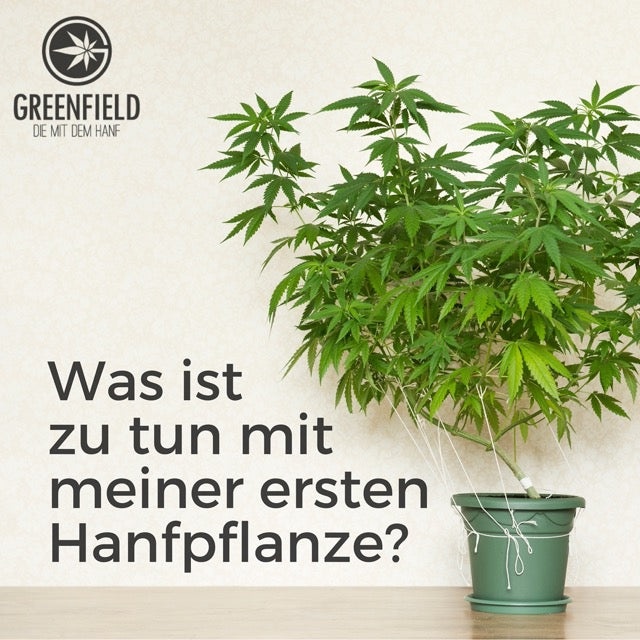
A few large plants
Many small plants
Classic grow: fewer plants, longer vegetative time
In a classic indoor grow, usually 3 to 5 plants per square meter are used. These plants receive several weeks of growth and develop strong side branches and larger main colas.
Advantages
Fewer plants, clearer management, larger individual plants.
Disadvantages
Longer grow duration and usually fewer harvest cycles per year.
Sea of Green: many small plants per 1 m²
The Sea of Green method typically works with 9 to 16 plants per m². The goal is to quickly fill the area with many compact plants and thereby enter the bloom phase earlier.
Advantages
Fast space utilization, uniform plant height, short cycles.
Disadvantages
More organization, more plant handling, and more dependent on homogeneous quality.
No-Veg growing: maximum space utilization with short cycles
No-Veg growing is a particularly consistent variation where plants are sent into bloom almost immediately after rooting. Typically, 12 to 20 plants per m² are used, depending on pot size, genetics, and setup.
This method usually does not yield more per plant, but it can increase the annual yield per m² because more harvests are possible per year.
Do more hemp plants per m² automatically bring more yield?
Not automatically. Many growers assume that a higher plant count directly leads to more yield. In practice, however, the yield per 1 m² is usually limited primarily by the available light output.
| LED output | Typical yield per m² | Classification |
|---|---|---|
| 300–400 W per m² | approx. 450–600 g | realistic range for modern indoor setups |
| 500–600 W per m² | approx. 600–800 g | only realistic with a very well-tuned setup |
Which plants are particularly suitable for many plants per m²?
For SOG and No-Veg, uniform, strong plants with a stable structure are particularly sensible. The more homogeneous the plants, the easier it is to use the space cleanly and efficiently.
If you are looking for suitable plants for your setup, you can find a selection in the shop under Buy hemp plants.
Frequently asked questions
How many hemp plants per m² are sensible for beginners?
For beginners, a classic grow with 3 to 5 plants per m² is usually clearer and easier to control.
Is SOG always better than a classic grow?
Not always. SOG can save time, but usually requires a more homogeneous setup and clean organization.
Why is the yield per m² more important than the yield per plant?
Because in indoor growing, the area and the light output determine the total yield more than the pure plant count.
Conclusion: What plant count makes sense?
The optimal number of hemp plants per m² depends on your method. If you want a few large plants, 3 to 5 plants is often a good choice. If you prefer short cycles and fast space utilization, you should opt for SOG or No-Veg with significantly more plants per m².
In the end, the overall setup always remains decisive: light, climate, genetics, and plant quality make the biggest difference.
Quick orientation
1–2 plants: SCROG
3–5 plants: classic grow
9–16 plants: SOG
12–20 plants: No-Veg